Ransomware has become one of the most stressful digital threats for individuals and small businesses alike. When files suddenly become inaccessible and a ransom note appears, panic sets in fast. In that moment, people urgently search for tools that promise recovery without paying criminals.
This is where the question Is StopDecrypter free to use? becomes more than a casual query; it becomes a deciding factor in how someone responds to a cyberattack. Understanding what StopDecrypter actually offers, how it works, and whether it costs anything is essential before trusting it with your data or your expectations.
StopDecrypter and Its Purpose
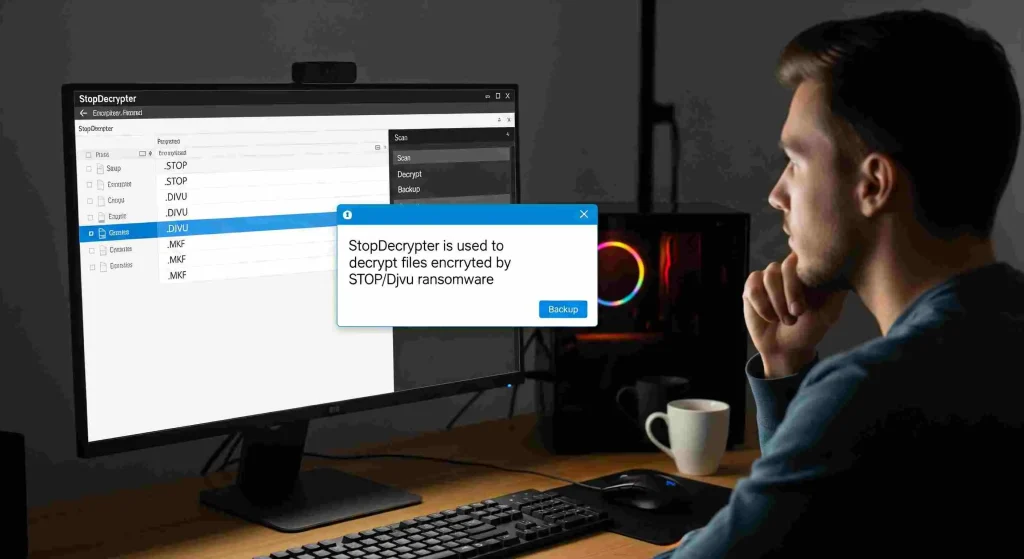
StopDecrypter is a ransomware decryption utility designed to help victims recover files encrypted by certain ransomware families. Its core mission is straightforward: provide a technical way to reverse encryption without giving in to ransom demands. Unlike general antivirus software, this type of tool does not focus on prevention. Instead, it steps in after the damage is done.
The tool gained attention because it targeted a particularly widespread ransomware strain that affected home users, freelancers, and small organizations. Many victims lacked backups, which made the promise of decryption incredibly appealing. Over time, StopDecrypter became a familiar name in cybersecurity discussions, especially in forums where victims shared recovery experiences.
To truly understand whether StopDecrypter fits your situation, it’s important to separate what the tool is capable of from what users often assume it can do.
How StopDecrypter Works at a Technical Level
Ransomware typically encrypts files using cryptographic keys. These keys can be either symmetric, asymmetric, or a combination of both. In many cases, attackers store the private key on their servers, making decryption nearly impossible without paying.
StopDecrypter operates by exploiting weaknesses in how some ransomware variants generate or store encryption keys. In earlier versions of certain ransomware families, developers made mistakes reusing keys, storing them locally, or generating them in predictable ways. StopDecrypter was built to take advantage of those flaws.
The tool scans encrypted files, identifies patterns, and attempts to reconstruct the key needed to decrypt them. This is not a guaranteed process. It works only when the ransomware implementation is flawed or when security researchers have already discovered the necessary workaround. This technical limitation plays a major role in how effective the tool is and why expectations must be realistic from the start.
Is StopDecrypter free to use in practice?
For most users, the simple answer is yes. StopDecrypter has been distributed as a free utility, intended to help ransomware victims without charging them for recovery. This free access has been one of its biggest strengths, especially for individuals who cannot afford expensive data recovery services.
However, free does not mean unrestricted or universally effective. The tool does not unlock every type of ransomware-encrypted file. It supports specific variants and versions. If the ransomware affecting your system falls outside those supported types, StopDecrypter will not be able to help, regardless of its cost.
So when people ask Is StopDecrypter free to use, the more nuanced answer is that it is free in terms of money, but limited in terms of scope and compatibility.
The Difference Between “Free” and “Guaranteed”
One of the biggest misunderstandings around decryption tools is the assumption that free means fully reliable. StopDecrypter does not promise guaranteed recovery. It offers a chance, based on technical feasibility.
Free tools like this are often created by cybersecurity researchers or security companies as a public service. Their goal is to weaken the ransomware ecosystem by reducing the number of successful ransom payments. While admirable, this goal does not translate into universal success for every victim.
Understanding this difference helps set realistic expectations. When someone searches Is StopDecrypter free to use, they are often also asking whether it will solve their problem completely. Those are two very different questions.
Supported Ransomware Variants and Limitations
StopDecrypter was designed to work with specific ransomware families, particularly earlier versions that used weaker encryption practices. Over time, ransomware developers adapted, closing those loopholes.
This means the tool’s effectiveness depends heavily on when the infection occurred and which variant was used. Newer versions of the same ransomware family may be immune to decryption attempts.
Another limitation is file integrity. Even when decryption is technically possible, corrupted files may not recover perfectly. Some files may open but contain errors, missing data, or formatting issues. These constraints are not unique to StopDecrypter. They apply to nearly all ransomware decryption tools, whether free or paid.
Why StopDecrypter Was Made Free
The decision to release StopDecrypter as a free tool was strategic. Charging for decryption would indirectly support the same profit-driven ecosystem that ransomware relies on. By offering a free alternative, developers aimed to discourage ransom payments.
Free access also encourages widespread use, which helps researchers gather more data about ransomware behavior. This feedback loop can lead to improved tools and better understanding of future threats.
When users ask Is StopDecrypter free to use, they are indirectly touching on this ethical stance. The tool exists not just as software, but as part of a broader effort to resist cyber extortion.
Comparing StopDecrypter With Paid Recovery Services
Paid data recovery services often promise higher success rates, personalized support, and advanced techniques. However, they are not magic solutions either. Many rely on the same fundamental decryption principles used by free tools.
The difference often lies in analysis time, expertise, and customer support. Paid services may spend more time examining your specific case, while free tools operate on a one-size-fits-all basis.
For users with non-critical data, trying a free tool like StopDecrypter first makes sense. For businesses with sensitive or mission-critical files, professional services may be worth considering after evaluating all risks.
The key takeaway is that free tools and paid services serve different needs, and one is not automatically superior to the other.
Is StopDecrypter free to use for businesses?
Small businesses frequently ask whether StopDecrypter can be used in commercial environments without licensing fees. In most cases, the tool has been made available without cost restrictions for both personal and professional use.
That said, businesses should approach ransomware recovery carefully. Using any decryption tool in a production environment carries risks, including data corruption or system instability.
IT teams should test recovery on copies of encrypted files whenever possible. Even though the tool is free, the potential impact of improper use can be costly. So while the answer to Is StopDecrypter free to use remains yes, responsible use matters more than the price tag.
Safety and Trust Considerations
Any tool claiming to decrypt ransomware raises understandable concerns. Victims worry about malware, data leaks, or further damage. StopDecrypter’s reputation has generally been positive because it originated from trusted cybersecurity research efforts.
Still, users should always follow best practices. Run the tool on isolated systems, ensure backups exist before attempting decryption, and avoid unofficial copies that may bundle malicious code.
Free does not mean risk-free, especially in the cybersecurity world. Awareness and caution are essential.
Common User Experiences and Expectations
User experiences with StopDecrypter vary widely. Some report full recovery of files with minimal effort. Others find that the tool cannot decrypt their data at all. These mixed results are not a reflection of quality but of compatibility. Ransomware evolves rapidly, and no single tool can keep up with every change.
When reading user stories, it’s important to focus on details such as ransomware variant, infection date, and system setup. These factors matter far more than general success claims.
The Role of Backups in Ransomware Recovery
No discussion about decryption tools is complete without mentioning backups. Even the best free tool cannot replace a solid backup strategy.
Backups provide certainty. Decryption tools provide possibility. StopDecrypter fits into the second category. It is a recovery attempt, not a recovery guarantee.
Users who rely solely on decryption tools often learn this lesson the hard way. Prevention and preparation remain the strongest defenses against ransomware.
Legal and Ethical Aspects of Using Decryption Tools
Using a decryption tool like StopDecrypter is generally legal, as it involves recovering your own data. There is no ethical issue with refusing to pay criminals and seeking alternative solutions.
In fact, many cybersecurity experts encourage this approach. Paying ransoms fuels further attacks and funds criminal operations.
From an ethical standpoint, free tools that empower victims are widely supported within the security community.
Is StopDecrypter free to use long-term
One concern users raise is whether the tool will remain free over time. Historically, StopDecrypter has been offered without cost, and there has been no strong indication of a shift toward paid licensing.
However, tools like this may eventually become obsolete as ransomware evolves. Free access does not guarantee long-term relevance. Users should view StopDecrypter as a situational solution, not a permanent safeguard.
Misconceptions About Decryption Speed and Ease
Another common myth is that decryption happens instantly. In reality, the process can take hours or even days, depending on file volume and system performance.
Free tools are not optimized for speed in the same way enterprise solutions might be. They prioritize functionality over convenience. Patience is often required, and interruptions can complicate recovery.
When StopDecrypter Is Not the Right Choice
There are scenarios where using StopDecrypter is simply not effective. If the ransomware uses strong, properly implemented encryption with remote key storage, decryption is mathematically infeasible.
In such cases, attempting recovery may waste time and emotional energy. Accepting the limitation and focusing on rebuilding systems may be the more practical path. Knowing when not to rely on a tool is just as important as knowing when to try it.
Is StopDecrypter free to use compared to alternatives
Compared to other decryption tools, StopDecrypter fits squarely within the free-access category. Many similar tools follow the same model, offering help without charging victims.
What sets StopDecrypter apart is its historical impact and recognition within the ransomware recovery space. That reputation has kept it relevant in discussions about free decryption solutions.
Still, users should always verify compatibility with their specific infection rather than relying on name recognition alone.
The Psychological Value of Free Recovery Tools
Beyond technical recovery, free tools offer psychological relief. Knowing there is an option besides paying criminals reduces panic and helplessness.
This emotional factor should not be underestimated. Even unsuccessful attempts can give victims a sense of control during a stressful event. In this sense, asking Is StopDecrypter free to use is also about emotional reassurance, not just cost.
Best Practices Before Using StopDecrypter
Before running any decryption tool, users should isolate the infected system, remove the ransomware if possible, and create backups of encrypted files.
- Running decryption on original files without backups risks permanent loss if something goes wrong.
- Preparation turns a free tool into a safer tool.
Conclusion
So, Is StopDecrypter free to use? Yes, it has been made available without cost, reflecting a broader effort to help ransomware victims avoid paying extortion fees. But free does not mean universal, instant, or guaranteed success. The tool works only for specific ransomware variants and relies on known weaknesses in encryption implementations.
StopDecrypter represents hope, not certainty. It is a valuable first step in recovery, especially for individuals and small organizations with limited resources. When used with realistic expectations, proper precautions, and an understanding of its limitations, it can make a meaningful difference.
In the bigger picture, the existence of free decryption tools highlights the importance of cybersecurity awareness, backups, and proactive defense. Recovery tools are helpful, but prevention remains the strongest strategy of all.